Palantir and the Silicon Valley Right Wing
Palantir
I first took notice of Palantir because of its stock, which rose from 200 in 2025, earning it the nickname “MAGA Fortune Stock.” The current CEO is Alex Karp, and the chairman is Peter Thiel. The company specializes in big data intelligence services, with clients including the military, government, and major corporations. Notable cases include assisting in locating Bin Laden in 2011 and suing the U.S. Army in 2016 to secure a military contract, winning the case based on the FASA Act, which mandates that the military should prioritize existing market products over custom solutions to reduce costs, similar to China’s 2015 military-civil fusion strategy.
For more information on Palantir, Silicon Valley 101 has a detailed program that you might find interesting.
Peter Thiel and the PayPal Mafia
Stanford offers a course on entrepreneurship: How to Start a Startup. This course was launched ten years ago, and I watched all the videos online. The host is Sam Altman (current CEO of OpenAI), and the guests include many now-famous names: Paul Graham (YC founder), Brian Chesky (Airbnb founder), Reid Hoffman (LinkedIn co-founder), Eric Schmidt (former CEO of Google), and Peter Thiel (founder of Founders Fund, core member of PayPal Mafia). Peter Thiel explained his business philosophy: pursuing monopoly rather than competition and published a classic book, Zero to One, stating that vertical research and innovation can not only bring monopoly profits but also drive continuous social innovation.
Peter Thiel’s career can be divided into several stages: studying philosophy and law at Stanford, briefly entering law firms and the financial industry before quickly exiting, co-founding PayPal in 1998, and successfully selling it to eBay in 2002. After PayPal, he built an influential investment portfolio through early investments in Facebook and founding Founders Fund (including ventures like SpaceX, Stripe, and Anduril). In 2004, he co-founded Palantir, applying technology directly to government and national security. He gradually transitioned from an entrepreneur to an investor and thought leader, continuously shaping Silicon Valley’s technological direction through capital, companies, and public discourse.
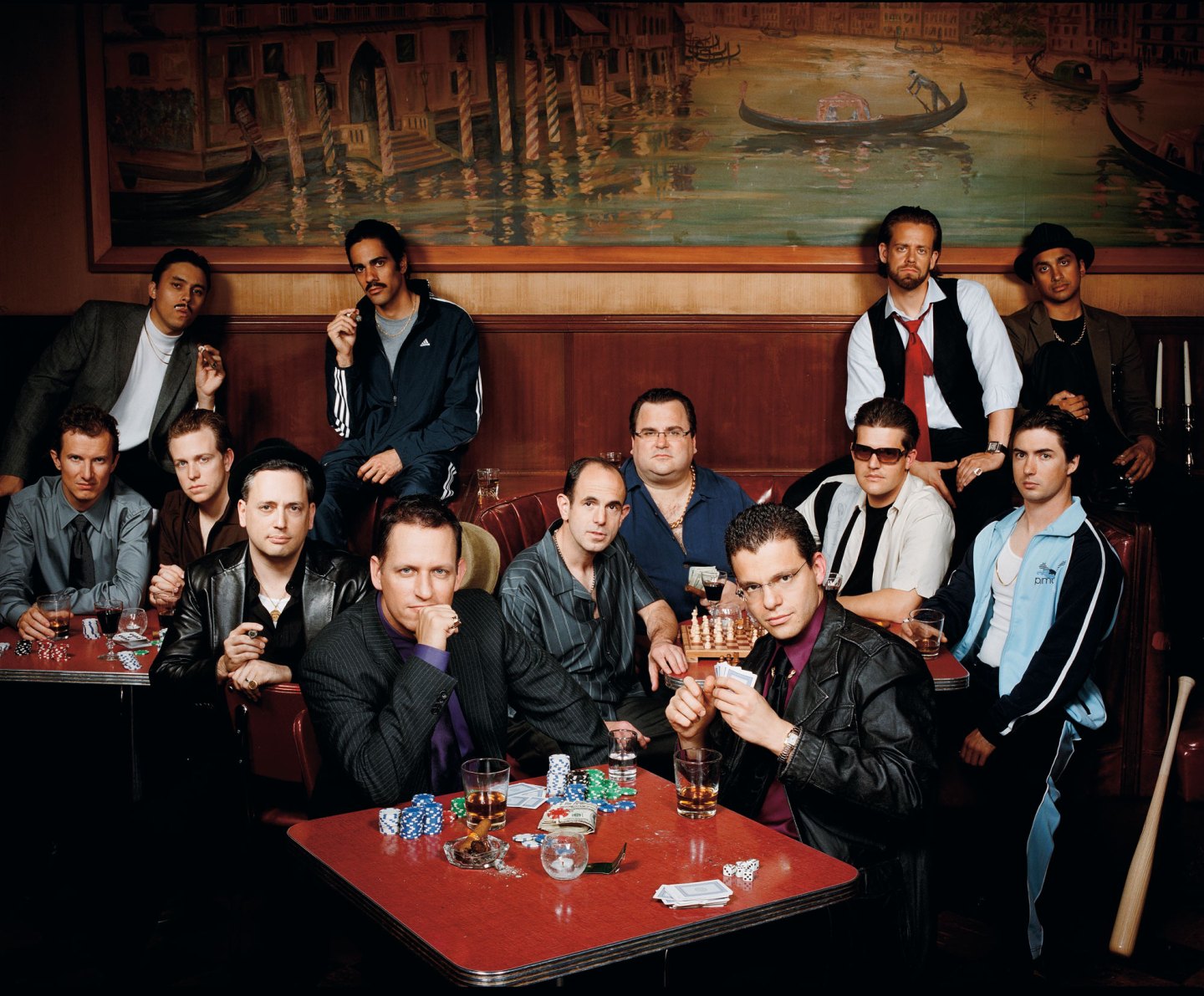
The early employees of PayPal have made a significant impact in the tech world, known as the PayPal Mafia: Elon Musk founded SpaceX, Tesla, and Neuralink, extending his reach into space and new energy; Reid Hoffman founded the world’s largest professional networking platform, LinkedIn. Additionally, this group gave rise to the video giant YouTube (co-founded by Jawed Karim, Chad Hurley, and Steve Chen), the review site pioneer Yelp (founded by Jeremy Stoppelman), and the enterprise social tool Yammer (founded by David Sacks). Tech genius Max Levchin went on to found Slide and fintech giant Affirm after leaving. In terms of capital operations, Roelof Botha and Keith Rabois hold key positions at Sequoia Capital and Founders Fund, respectively. This group not only founded companies with a total market value of trillions of dollars but also formed a powerful force shaping the global tech landscape through close mutual investments and collaborations.
Washington and the Silicon Valley Right
The relationship between Washington and Silicon Valley can be divided into several stages:
- 1970s - 1980s: Cold War-driven Incubation Period During this phase, the relationship was a “one-way dependency” contractor relationship. Washington injected the first capital into the nascent Silicon Valley through Department of Defense contracts and NASA projects, while Silicon Valley served as the technical “logistics department” for the Cold War defense system. Although their interests aligned, culturally they operated independently, with the government as an invisible patron and tech personnel as low-key suppliers.
- 1990s - 2000s: Arrogant Estrangement after the Internet Boom With the explosion of personal computers and commercial internet, Silicon Valley entered an era of extreme confidence in free competition. Tech elites believed in the omnipotence of technology and viewed Washington as a slow, bureaucratic “old world.” They maintained a distance until the “Microsoft antitrust case” made Silicon Valley feel the heavy hand of political regulation for the first time.
- 2010s: Obama Era Honeymoon and Turbulence The two sides entered a period of deep exchange with frequent “revolving doors.” The Obama administration viewed Silicon Valley as an engine of social progress, with many tech executives entering the White House to assist in digital governance, and tech moguls becoming policy advisors. However, the 2013 “Snowden incident” led to a severe trust crisis over privacy protection and national surveillance, with tech companies openly opposing intelligence agencies on encryption.
- 2020s - 2026: Power Integration amid Geopolitical Competition In the context of the AI arms race and global supply chain restructuring, the two sides formed an unprecedented “tech-political complex.” Silicon Valley no longer just provided tools but, through figures like Elon Musk and Peter Thiel, directly entered the administrative system to participate in governance. Washington began to view computing power, energy, and capital as core to national sovereignty, completing the transformation from “partners” to “power co-owners” with tech giants.
Since Trump’s second term in the White House, the relationship between Washington and Silicon Valley has become increasingly close, forming a new Silicon Valley force: Peter Thiel’s former employee JD Vance became the U.S. Vice President; Elon Musk led the Department of Government Efficiency, slashing projects with a team of Palantir people using data methods; David Sacks became the White House AI and Cryptocurrency Czar; Anduril secured major contracts with the Department of Defense, and Grok and Gemini entered the Pentagon, among others.
| Name | Silicon Valley Background | Government Role | Achievements |
|---|---|---|---|
| JD Vance | Partner at Peter Thiel’s Mithril Capital | U.S. Vice President | Acts as Silicon Valley capital’s top agent in the White House, promoting tech acceleration and conservative policy integration. |
| Elon Musk | Leader of Tesla, SpaceX, xAI | Leader of the Department of Government Efficiency (DOGE) | Leads a team of Palantir engineers to conduct “code audits” on federal agencies, cutting redundant budgets and projects through big data methods. |
| David Sacks | ”PayPal Mafia,” founder of Craft Ventures | White House AI and Cryptocurrency Czar | Leads the drafting of a deregulation framework for AI, promotes cryptocurrency legalization and the Web3 national strategy. |
| Palmer Luckey | Founder of Oculus and Anduril | Core Supplier to the Department of Defense | Secured a $6 billion “virtual border wall” contract and provides AI-driven drones and submersible systems to the Pentagon. |
| Jacob Helberg | Senior Advisor to the CEO of Palantir | Assistant Secretary of State | Implements the “Silicon Valley Peace” plan, reorganizing the AI supply chain alliance globally, responsible for geopolitical tech competition. |
| Trae Stephens | Partner at Founders Fund, Palantir Veteran | Defense Department Restructuring Advisor | Enforces defense procurement reform, shifting traditional military budgets towards Silicon Valley’s “software-defined weapons” and unmanned clusters. |
| Brendan Carr | Senior Commissioner at the FCC (endorsed by Musk) | Chair of the FCC (Federal Communications Commission) | Grants policy privileges to Starlink and pushes for legal changes to strip big tech companies of social media content review rights. |
| Chris Wright | CEO of Liberty Energy (Silicon Valley energy ally) | Secretary of Energy | Simplifies nuclear and shale gas approval processes to address the power supply crisis facing AI data centers. |
| Marc Andreessen | Founder of A16Z, internet pioneer | White House Technology Policy Advisor | Leads the repeal of Biden-era AI administrative restrictions, promoting open-source AI as a core of national strategic competition. |
| Sam Altman | CEO of OpenAI | National Computing Infrastructure Partner | Launches the “Stargate” project with a total investment of $500 billion, supported by government-provided electricity and land. |