From the 2026 Iran War to Iraq: Three Shapes of the Same U.S. Military Machine
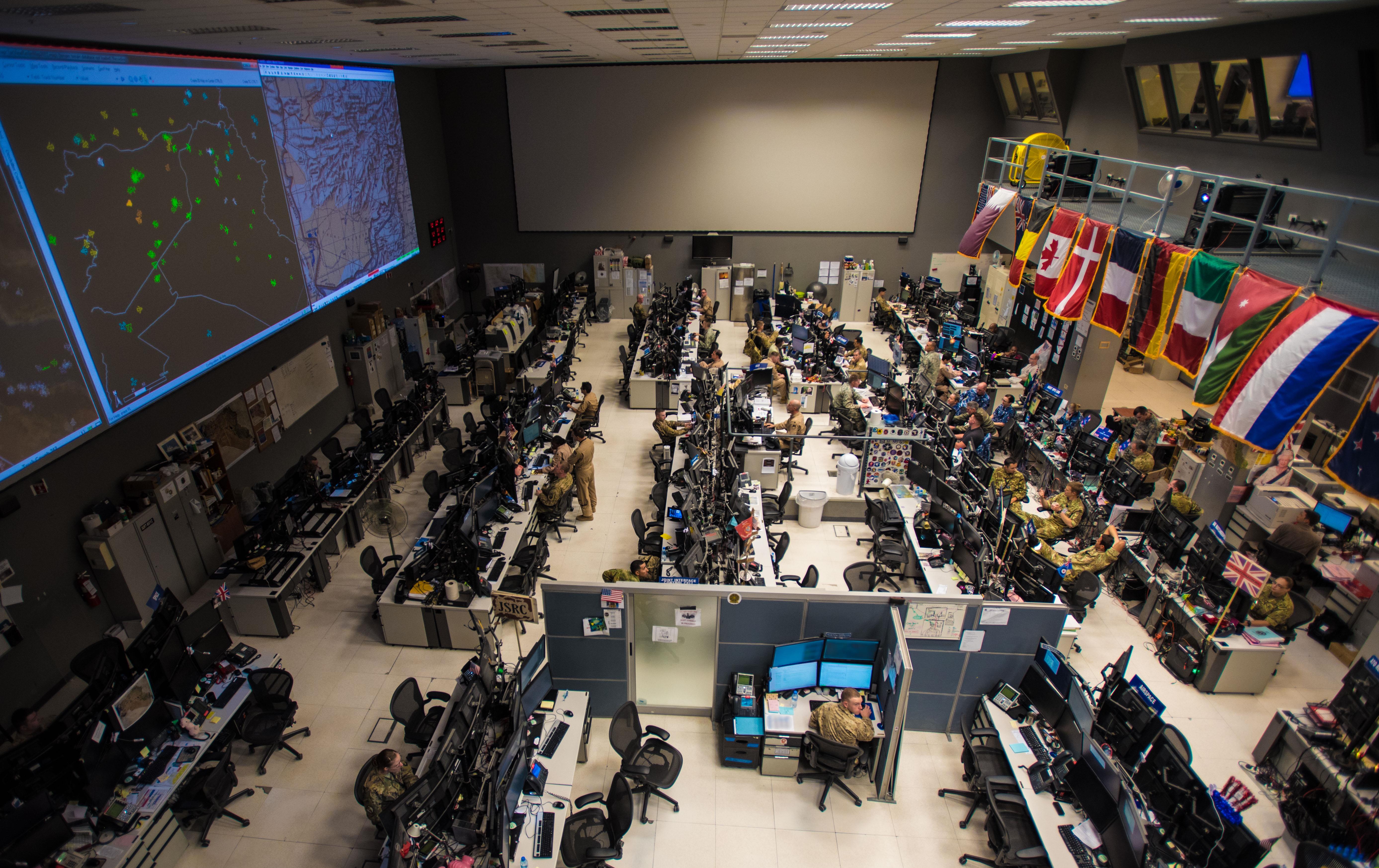
On February 28, 2026 at 1:15 a.m. ET, CENTCOM commander Admiral Brad Cooper issued the first wave of strike orders from the Combined Air Operations Center at Al Udeid Air Base, Qatar — codenamed Operation Epic Fury on the U.S. side, Operation Roaring Lion on the Israeli side. The first 12 hours delivered roughly 900 strikes; the first 72 hours hit more than 1,700 targets, including the assassination of Iran’s Supreme Leader Ali Khamenei and several top officials. As of this writing the campaign has run more than 52 days, with 13 U.S. troops killed and over 400 wounded, the Iranian navy effectively destroyed, and the Strait of Hormuz briefly closed. No new AUMF. No UN resolution. No MNF-I-style multinational ground force. Just Article II of the Constitution, a War Powers Resolution the Senate voted 53-47 to block, and a CENTCOM-centered joint air-sea-space campaign.
This is the most consequential U.S. high-intensity campaign in two decades, and the clearest live test of the post-Goldwater-Nichols U.S. military organizational model since 1986. Across command chain, legal authorization, weapons and acquisition, logistics, training and exercises, and interagency coordination, Epic Fury has taken every buzzword of the past decade — Integrated Deterrence, Multi-Domain Operations, Replicator, Distributed Maritime Operations, JADC2 — from the slide deck to the battlefield at once.
This essay centers on Epic Fury. Five sections dissect its command architecture, acquisition implications, logistics and stockpile realities, training/exercise rehearsal trail, and strategic implications. Then we look back at its eight-month-earlier prelude — Midnight Hammer, the 48-hour June 2025 precision strike that first tested the legal path and command posture later scaled up. Finally, the 2003-2014 Iraq War as historical reference — a 9-year occupation-plus-counterinsurgency war — the necessary background to see what Epic Fury is deliberately not doing.
Ordered newest to oldest, these three cases span the full scale: a months-long multi-domain air-sea campaign (Epic Fury), a surgical bunker-buster strike (Midnight Hammer), and a full-scale ground war with occupation (Iraq). Side by side, they reveal how the U.S. flexes the same “war machine” at the institutional level — how authority is assembled, how command chains are swapped, how agencies coordinate (or fail to).
I. Epic Fury 2026: Full-Scale War
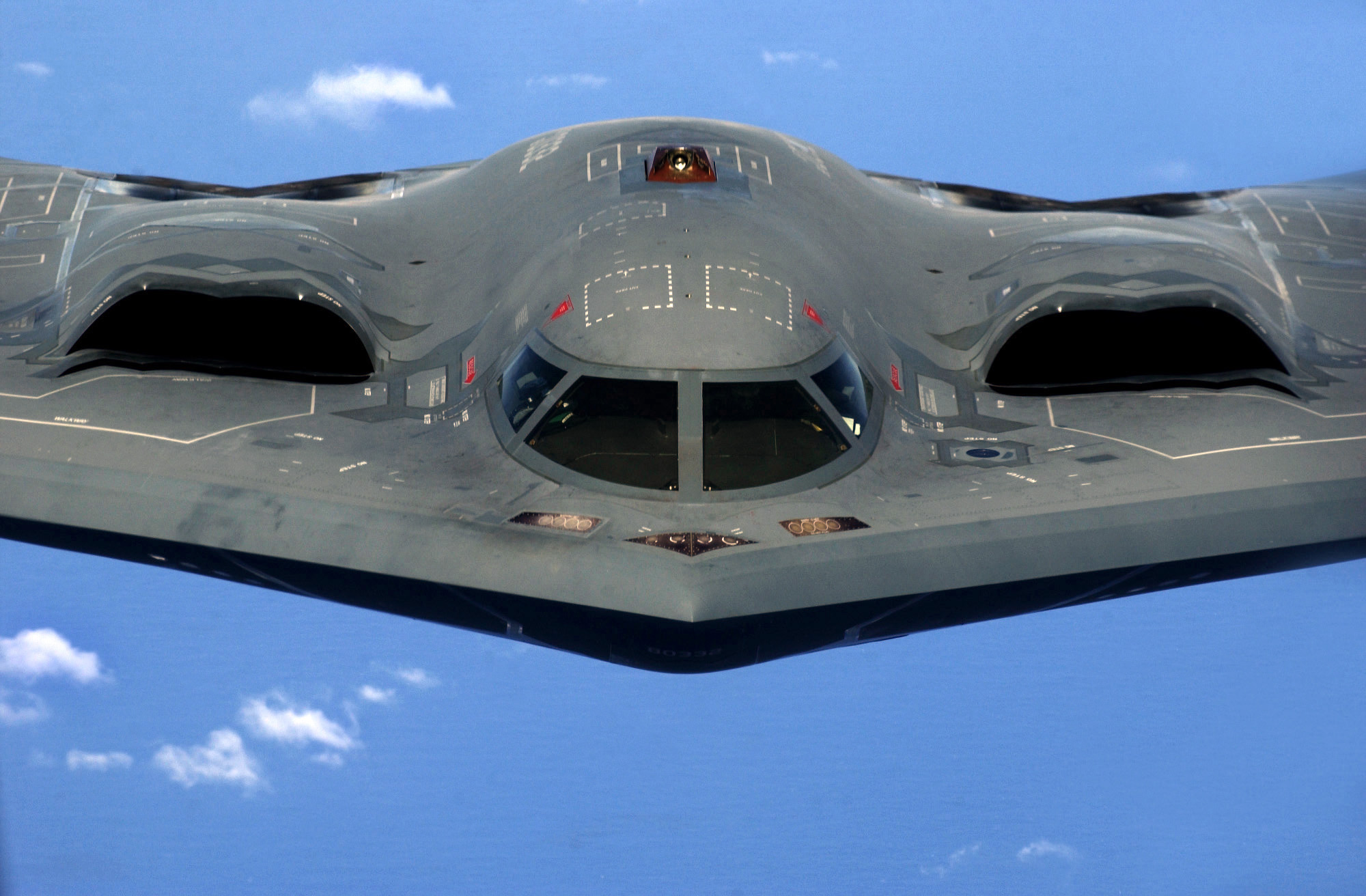
On February 28, 2026 at 1:15 a.m. ET, the U.S. and Israel launched a large-scale multi-domain military operation. U.S. codename: Operation Epic Fury. Israeli codename: Operation Roaring Lion. The first 12 hours delivered about 900 strikes; the first 72 hours hit more than 1,700 targets — IRGC command and control facilities, air defenses, missile and drone launch sites, and military airfields — and included the assassination of Supreme Leader Ali Khamenei and several senior officials on day one. CENTCOM called it “the largest regional concentration of American military firepower in a generation.”
This is a sustained multi-week air-sea campaign. Its organizational outline, from public reporting:
Top-level chain:
President (Trump) → SecDef (Pete Hegseth) → CJCS (Dan Caine) → CENTCOM (Adm. Brad Cooper)
Where Franks at CENTCOM in 2003 was an Army four-star, Cooper in 2026 is a Navy admiral — a shift that itself reflects the theater’s center of gravity moving from ground counterterrorism toward maritime, air, and missile-defense.
Task organization: Epic Fury uses CENTCOM’s CAOC at Al Udeid (the same facility as in 2003) as the hub for air operations — but without the Iraq-style expansion into four full CFLCC / CFACC / CFMCC / CFSOCC component commands (because there’s no ground fight). The publicly confirmed new formation is Task Force Scorpion Strike, which fielded the U.S. military’s LUCAS long-range one-way attack drone in combat for the first time.
Assets employed (publicly disclosed):
- Strategic strike: B-2 Spirit stealth bombers delivering 2,000-lb precision munitions against Iranian ballistic-missile complexes
- Air superiority / SEAD: F-22, F-35 (air dominance and suppression of Iranian air defenses)
- Multi-role strike: F-16, F/A-18 (command centers, airfields, communications nodes)
- Close air support: A-10 (dispersed ground targets, low-altitude precision)
- Electronic warfare: EA-18G Growler (jamming surveillance radars, cutting communications)
- ISR: MQ-9 Reaper, RC-135, E-3 AWACS, E-7 Wedgetail
- UAS mass: Task Force Scorpion Strike’s LUCAS drones at scale
- Maritime: multiple carrier strike groups plus guided-missile destroyers
- Missile defense: Patriot and THAAD covering Gulf partner bases
All six services in the fight: the CENTCOM press release explicitly notes Soldiers, Sailors, Airmen, Marines, Guardians, and Coast Guardsmen are all participating. Space Force (Guardians) provides satellite ISR, GPS, communications, and space domain awareness; the Coast Guard supports the maritime blockade. It’s the largest live-combat role for Space Force since its 2019 standup.
Legal path: another expansion of Article II. The Trump administration did not seek a new AUMF — only Article II commander-in-chief authority plus the 48-hour War Powers Resolution notification. On March 4 the Senate voted 53–47 to block a War Powers Resolution (H.J.Res. 156) that would have constrained the President; the House version also failed. The WPR’s 60-day clock approaches May 1, 2026, but the President can unilaterally certify another 30 days for “orderly withdrawal.”
Some administration officials invoke AUMF 2001 (counterterrorism) as a backup, arguing Iran harbors al-Qaeda — a claim widely disputed by legal scholars and most members of Congress as insufficient to cover Epic Fury’s scale and targets. The State Department’s Office of the Legal Adviser published an April 2026 position paper, Operation Epic Fury and International Law, invoking Article 51 of the UN Charter (anticipatory self-defense) as the international-law basis — the same contested path used to justify the 2003 Iraq invasion.
Coalition: bilateral core, base network, limited NATO involvement. Epic Fury’s coalition structure is nothing like the 30+ nation MNF-I web:
- Core bilateral: U.S. and Israel fighting the same campaign under two codenames (Epic Fury = Roaring Lion)
- Base hosts: Qatar (Al Udeid), UAE (Al Dhafra), Bahrain (5th Fleet), Saudi Arabia, Jordan, Kuwait, Iraq (existing forces)
- NATO limited engagement: Iranian drones reached Turkey’s Incirlik AB; NATO air defenses intercepted. No public record of NATO forces participating in strikes.
- Spain refused U.S. use of its bases — a political signal
- UK: a Cyprus RAF base was hit by a Hezbollah drone; intelligence cooperation is presumed but no public evidence of UK direct participation in strikes
- Pakistan brokered the first ceasefire round in Islamabad on April 7-8 (Trump announced a two-week truce, which collapsed on April 11; the U.S. then launched a naval blockade of Iranian ports; a Hezbollah-Israel ceasefire followed April 16; Trump extended the Iran truce April 21)
A “bilateral core + base hosts + limited NATO + third-party mediation” structure — quite different from the Iraq MNF-I “multinational force, unified chain, regional division” model. Closer in shape to a high-intensity short-duration joint air campaign.
Interagency: many agencies engaged, but no occupation architecture. Epic Fury’s longer duration pulls in more agencies than a typical precision strike:
- DoD: CENTCOM leads, all six services contribute
- Intelligence Community: CIA, NSA, DIA, NGA supply sustained targeting and battlefield awareness
- State: allied diplomacy, sanctions and blockade coordination, international-law position papers, mediation
- Treasury TFI: new Iran financial sanctions enforcement
- Energy / NNSA: post-strike radiological assessment and public warnings
- DHS: homeland critical-infrastructure threat monitoring
- Justice: possible asset seizures and indictments related to Iranian action
But: no CPA, no MNF-I-scale occupation HQ, no PRT network. Because the mission is destruction-plus-deterrence, not regime change or nation-building. The civ-mil hybrid apparatus stays dark.
Casualties and effects (public data as of April 22, 2026):
- U.S.: 13 killed, 400+ wounded. The most visible single-asset loss was an Iranian ballistic missile that hit Prince Sultan Air Base in Saudi Arabia and destroyed a U.S. Air Force E-3 Sentry AWACS aircraft.
- Iranian military: 3,375 to 6,000+ killed (estimates vary widely)
- Economic and spillover: Iran briefly closed the Strait of Hormuz; global shipping disrupted; Hezbollah drawn in; roughly one-sixth of Lebanon’s population displaced
Structural Shifts in Iran’s Force Projection
The most organizationally significant outcome of Epic Fury isn’t the casualty count — it is the structural degradation of Iran’s ability to project force. Drawing on IDF assessments, U.S. intelligence estimates, and analysis by the Soufan Center and others, the 52-day campaign produced the following picture of Iranian military capability — the data that most sharply separates Epic Fury from Midnight Hammer’s “symbolic Iranian retaliation” of just 14 ballistic missiles at Al Udeid:
Ballistic missile stockpile:
- Pre-war inventory roughly 2,500 missiles; early-April estimate ~1,000 remaining — a ~60% reduction
- Epic Fury’s first weeks destroyed approximately 700 missiles in storage via strikes on depots
- Launcher losses were larger: IDF claims 70% destroyed; U.S. intelligence estimates ~50%; more aggressive Israeli assessments say only 20-25% of launchers remain operational
- Notable: substantial IRBM stockpile is intact in deep bunkers — the reduction largely came from destroying launchers and storage facilities, not deep reserves
Launch rate collapse:
- Opening day (February 28): 480 launches (ballistic plus drones)
- Day 10 (March 9): 40 launches — a 92% drop
- Late March: daily ballistic missiles at Israel fell from 90 on day one to 10-15 per day
Iranian strikes on Israel and U.S. bases:
- First 10 days: ~300 ballistic missiles launched at Israel, nearly half with cluster submunitions
- Confirmed hits: Tel Aviv residential areas, the vicinity of Kirya (IDF headquarters), a drone factory in Petah Tikva, Beit Shemesh (highest casualty incident)
- March 19: 14 salvos in a single hour, five of them targeting Jerusalem
- Prince Sultan AB (Saudi Arabia): hit, destroying a U.S. E-3 Sentry AWACS
- Strikes on U.S. bases in Qatar, Bahrain, Jordan, Kuwait, UAE — most intercepted by Patriot / THAAD, a few penetrated
Drones (Shahed family):
- Even after Epic Fury, Iran retains 50-100 one-way attack drones per day launch capacity
- Shahed stockpile still in the thousands — the single biggest unresolved threat from Epic Fury
- Reason: drones are produced in civilian facilities, far more resilient to airstrikes than ballistic missiles — airstrikes cannot fully eliminate drone production
Navy (almost entirely eliminated):
- About 150 surface ships destroyed — essentially the whole surface fleet
- Every submarine sunk
- 97% of naval mine stockpile eliminated
- Strait of Hormuz was briefly closed but Iran lacked the means to sustain the closure
Integrated Air Defense System (IADS): the air defense network collapsed within the first 72 hours as radar arrays were destroyed at scale. This is the direct result of F-35 + EA-18G Growler SEAD suppression — and the core data the U.S. cites for Epic Fury’s tactical success.
Decapitation strikes:
- Supreme Leader Ali Khamenei (killed on day one, February 28)
- Defense Minister Aziz Nasirzadeh
- IRGC Commander Mohammad Pakpour
- Chief of Staff of the Armed Forces Mohammad Bagheri
- Senior adviser to Khamenei Ali Shamkhani
- 9 senior nuclear scientists (per IDF)
- 1,000+ senior and mid-level IRGC and Basij commanders
- About 40 top officials publicly named
- Succession: Mojtaba Khamenei (son of Ali Khamenei) assumed the role of Supreme Leader on March 8
Proxy network:
- Hezbollah (Lebanon): launched several rocket salvos during Epic Fury, but has been in structural decline since 2024; concluded a separate ceasefire with Israel on April 16
- Houthis (Yemen): announced intent to resume Red Sea shipping attacks but have retreated into an “organizational survival” posture; the “axis of resistance” narrative has been displaced by mere continuity
- Iraqi Shia militias: constrained by the Trump administration’s explicit rejection of Iran-backed militias joining the Iraqi cabinet — they cannot leverage Iraq the way they did in 2020-24
- Syrian proxies: effectively eliminated after the 2024 collapse of the Assad regime
Overall assessment: Iran’s “axis of resistance” narrative has, by April, given way to organizational survival. But Epic Fury has not eliminated the Iranian military threat — the ballistic missile stockpile is still in the thousands, drone production capacity is resilient, and the proxy network is weakened but not destroyed. The drop from “force projection” to “sporadic harassment” is real; the drop from “strategic threat” to “threat eliminated” is not. This is the tactical reality behind Section V’s open question about “what if the Iranian regime actually destabilizes” — Iran is weakened but not broken, declining but not gone.
This isn’t a 48-hour strike. It is a 52+ day high-intensity campaign — and 52 days still haven’t actually resolved the adversary.
II. Epic Fury: Weapons and the Acquisition System Under Live Test
Epic Fury is not just a combat operation — it is a stress test of a decade of U.S. weapons acquisition decisions.
F-35 in its first strategic air campaign. The F-35 Lightning II entered service in early 2015 and has appeared in smaller conflicts since (sporadic use over Syria, and Israeli operations), but Epic Fury is the first time the U.S. has put F-35 at the core of a strategic air campaign at scale. Its EOTS infrared sensor, AESA radar, and MADL data link performed in SEAD (suppression of enemy air defenses) “above training-baseline expectations,” in CENTCOM’s public phrasing. The long-running controversy over F-35’s $2 trillion lifecycle cost is now being partially vindicated in practice — at least inside the combat community, the verdict has converged on “ridiculously expensive but clearly works.” This is a critical catalyst for F-35’s follow-on orders, including Block 4 and TR-3 upgrades.
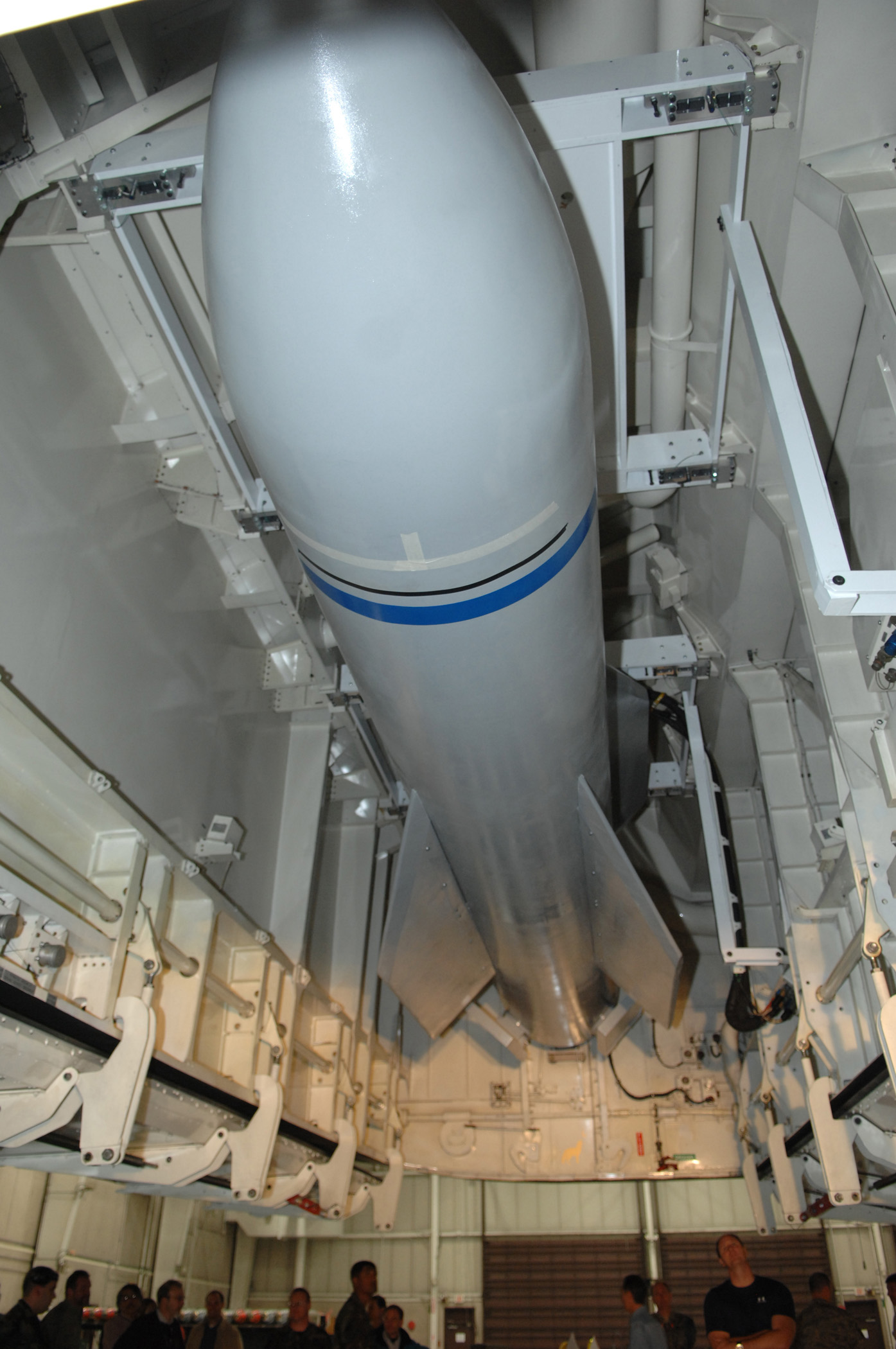
B-2 + GBU-57 sustained strikes and a stockpile alarm. Epic Fury’s first few weeks show public data consistent with a B-2 rotation “every one to two days.” GBU-57 consumption has triggered a stockpile alarm in Washington. The GAO estimated the pre-2023 MOP inventory at roughly 20 rounds, and single production cycles run 6-12 months. Even with accelerated small-batch production during Epic Fury, retired general officers have publicly discussed that the strategic weapon stockpile is approaching depletion. The emergency MOP production funding Congress has pushed into the FY26 supplemental is the direct response — and is widely speculated to be the logistics backdrop for Trump’s April 21 ceasefire extension.
LUCAS drones: rapid combat fielding via OTA. Task Force Scorpion Strike’s LUCAS (long-range one-way attack drone) came out of the 2023 Replicator initiative, which aimed to field large numbers of 500K attritable platforms to offset adversary mass. Before Epic Fury, LUCAS had only exercised on desert ranges; Epic Fury took it from development to combat deployment in under 18 months, via the Middle Tier of Acquisition (MTA) and Other Transaction Authority (OTA) fast lanes in DoD 5000. This is the single most visible case study of the 2020s acquisition reforms — and it is a direct application of the Ukraine-war lesson on “drone attrition.” Combat feedback has reportedly exceeded expectations, and non-traditional contractors like Anduril and Shield AI have won wartime-scale orders for the first time.
EA-18G Growler’s value on display. Iran’s air defenses collapsed in the first 48 hours of Epic Fury. After-action assessments attribute a major share of that to Growler’s distributed electronic attack capability. The unresolved 2024 debate — “upgrade Growler vs. field Next-Gen Jammer” — is now back on the OSD priority list.
Tomahawk consumption and the production gap. Tomahawk Block V production runs about 150-200 per year; Epic Fury’s 52 days have consumed an estimated 500+ (across destroyers and the nuclear submarine). Same problem as MOP from a different angle: wartime consumption far exceeds peacetime capacity, and capacity expansion takes years.
III. Epic Fury: Logistics, Stockpile, and Base Network
Epic Fury has exposed two hard logistical bottlenecks in the U.S. system: munitions inventory and carrier availability.
Carrier strike group deployment strain. Only two Gerald R. Ford-class carriers are in service today (Ford, JFK); several Nimitz-class units are near their end-of-life windows. Epic Fury has simultaneously committed three carriers (Nimitz, Truman, and Ford rotating), pushing U.S. global carrier posture to the edge of elasticity — the Indo-Pacific carrier presence has briefly dropped to 0-1, which itself is a strategic signal that China has noted. The Navy has already postponed Nimitz’s decommissioning by six months and accelerated Kennedy (CVN-79) initial operational certification.
The Gulf base network fully activated. The Middle East base network built out during the Iraq era has been fully lit up:
- Al Udeid (Qatar): CAOC + forward B-2 / F-35 base + tanker hub
- Al Dhafra (UAE): F-22 / MQ-9 / tanker stage
- Bahrain: 5th Fleet HQ + mine countermeasures
- Jordan (Muwaffaq Salti AB + Azraq): SOF forward + ISR
- Kuwait (Camp Arifjan): Army logistics hub
- Iraq (Al Asad + Erbil): existing garrisons + intelligence fusion
APS-5 (Army Prepositioned Stock in the Middle East) has been a key lever — most of the additional ground gear and ammunition delivered to the Gulf during Epic Fury came straight from prepositioned stocks, eliminating the cross-ocean sealift lag that Iraq-era deployments required. This is the strategic payoff of the APS system built up since the 1990s: in a crisis, fly the people — the kit is already there.
The legal novelty of the naval blockade. After the Islamabad talks failed on April 11, the U.S. launched the largest naval blockade since the Cold War — commercial vessel inspection and interdiction at Iranian ports, executed by Coast Guard + MSC + Navy combined. This touches new ground that no SOFA or prior agreement covers: Does it constitute an act of war? Under what legal framework (peacetime maritime law enforcement, wartime blockade, UN Charter Article 41)? There is no settled answer; international law scholars are still arguing as of April.
Structural shift in contractor model. Compared with Iraq’s LOGCAP (KBR-dominated, focused on ground construction and sustainment), Epic Fury’s contractor ecosystem leans toward technology:
- Anduril: a major supplier in the LUCAS family
- Palantir: CENTCOM’s AI target identification and fusion platforms (Gotham / MetaConstellation)
- SpaceX / Starlink: theater satellite communications backup
- Shield AI, Helsing, SAIC, Leidos and other AI-first / IT-first defense companies taking first-time wartime orders at scale
Traditional LOGCAP-style ground construction has not scaled up — because there are no new ground bases to build. The center of gravity of market-based sustainment has shifted from “build bases, run kitchens, guard gates” to “write software, build drones, process data.”
IV. Epic Fury: The Training and Exercise Pipeline That Rehearsed This
Epic Fury did not appear from nowhere. Walking back three to five years of exercises shows how it was systematically rehearsed into existence:
- RIMPAC 2022 / 2024: Carrier strike group long-duration operations, multinational maritime operations, ASW. The three-carrier rotation pattern in Epic Fury was drilled in RIMPAC.
- Space Flag 2023 / 2024: Space Force space domain awareness, counter-satellite, GPS jamming resilience. Epic Fury is its first formal combat validation.
- Cyber Flag 2024: USCYBERCOM’s annual cyber warfare exercise, already covering offensive / defensive play against Iranian APT groups. The collapse of Iranian communications in Epic Fury’s opening days tracks directly with these exercise outputs.
- Red Flag 2024 / 2025: Nellis AFB large-scale exercises, with multiple open-source analyses indicating repeated rehearsal of SEAD strikes against IRGC-style target sets.
- Bold Quest: CJCS-sponsored multinational interoperability exercise — the data-link integration between U.S. and Israeli forces in Epic Fury rests on years of Bold Quest foundation work.
- Internal Look 2023: CENTCOM’s theater CPX (command post exercise), later reported to have rehearsed C2 for a large-scale Iran campaign — including the prototype organization of Task Force Scorpion Strike.
JADC2 at industrial scale for the first time. Joint All-Domain Command and Control is the most expensive C2 transformation program of 2020-2025. Epic Fury is its first industrial-scale application. Data from air, sea, space, electromagnetic, and cyber domains converge at a CAOC upstream fusion layer, then fan out to service execution — a pattern rehearsed in Internal Look and similar CPXs for five years. Epic Fury is where that pattern moved from PowerPoint to a working kill chain.
Replicator reaches live kill-chain closure. Announced in 2023 and entering production in 2024, the first Replicator batch (on the order of 3,000 LUCAS-class platforms) has now entered live kill chains in Epic Fury. Project-to-combat in under 24 months — compared with Iraq-era UAS taking roughly a decade from lab to Predator combat — is the first large-scale proof point for 2020s acquisition reforms. This will directly shape FY27 budget and congressional support for a Replicator follow-on.
V. Epic Fury: Strategic Implications and Open Questions
The organizational significance of Epic Fury is that it takes the past decade of U.S. military buzzwords to live fire for the first time:
- Integrated Deterrence (2022 NDS) → U.S.-Israel joint operations + regional allied base network + economic / financial sanctions + cyber strikes + kinetic strikes, all concurrent
- Multi-Domain Operations (2022 JWC) → synchronized air / sea / space / electromagnetic / cyber kill chain
- Affordable Mass (2023 Replicator) → LUCAS swarm debut
- Distributed Maritime Operations (Navy 2021) → three carriers + destroyer groups distributed
- Force Design 2030 (Marine Corps) → Marines participate but not as “main ground force”
Concepts that circulated as PowerPoint for years are now citable combat examples. For the next 5-10 years, any DoD discussion about “the new form of war” will default to Epic Fury as its reference point.
But Epic Fury leaves three large unanswered questions:
One — what happens when MOP / Tomahawk inventory runs out? U.S. high-end strategic strike stockpile was originally sized for a conflict with China. Epic Fury has consumed most of the U.S. MOP inventory and a substantial share of Tomahawks. If an Indo-Pacific crisis erupts in the next 2-3 years, U.S. sustained strike capability will be substantially constrained. This is the most real and least publicly discussed strategic cost of Epic Fury.
Two — what if the Iranian regime actually destabilizes? With Khamenei killed, Iran enters a succession crisis. If the IRGC fragments internally, or a coup occurs, or Iran slides into failed-state territory, the U.S. military has no off-the-shelf architecture to absorb the ensuing stability operation. CPA-style interim authorities are not in current policy thinking, and training and organizational prep for civ-mil hybrid operations have essentially been frozen since 2011. This is a 21st-century echo of the Iraq long-tail problem: precision strikes win, but the organizational gap for “what comes after” is still there. If Iran does lose coherence, the U.S. will be reacting rather than leading.
Three — does congressional absence become permanent? Epic Fury’s scale (52 days, 1,700+ strikes, assassinating a foreign head of state, 413 U.S. casualties) far exceeds any ordinary understanding of “limited action,” yet the operation runs under a single Article II + WPR notification layer, and the Senate has rejected a restrictive resolution along party lines. That pushes the constitutional edge of unilateral presidential use of force to a historically new position. Will the next Congress or Supreme Court push back? No signs yet. The center of gravity of legal authority has effectively shifted from Congress to the Oval Office — Epic Fury promotes that trend from “edge cases” to “flagship case.”
Any one of these three questions could define the direction of U.S. military organizational evolution in the early 2030s.
VI. The Prelude: Midnight Hammer, June 2025
Epic Fury is not the first U.S. strike on Iran in the current crisis. Eight months earlier, a vastly smaller operation tested the same CENTCOM architecture — and the same legal path that later scaled up.
On June 13, 2025, Israel launched Operation Rising Lion, a large-scale air campaign against Iranian nuclear facilities, missile bases, and senior military leaders. After 11 days of missile exchanges, the U.S. joined at dawn on June 22 with Operation Midnight Hammer: 7 B-2 Spirit bombers from Whiteman AFB, Missouri, flew approximately 37 hours nonstop and dropped 14 GBU-57 Massive Ordnance Penetrators (MOPs) on three Iranian nuclear sites — Fordow, Natanz, and Isfahan. A nuclear-powered Navy submarine simultaneously launched about 30 Tomahawk cruise missiles at Isfahan-area targets. Another three B-2s flew a Guam-direction decoy. On June 23 Iran fired a symbolic ballistic-missile response at Al Udeid Air Base in Qatar with no U.S. casualties; on June 24 a ceasefire took hold.
Structurally a minimal operation:
- Legal: no new AUMF. Article II plus War Powers Resolution notification, no prior congressional authorization.
- Command: a straight-through “President → SecDef → CJCS → CENTCOM → task force” chain. The CAOC controlled the mission directly — no JTF stood up.
- Interagency: DoD + IC + a very thin State Department role. The civ-mil hybrid apparatus never activated.
- Coalition: bilateral deconfliction with Israel, base-host diplomacy with Gulf partners.
From B-2 takeoff to landing: under 40 hours. The textbook demonstration of a U.S. precision strike.
But this phase didn’t resolve the underlying problem. Iran kept rebuilding and kept firing missiles at Israel. Eight months later, U.S. and Israeli leaders decided to settle the issue — and Epic Fury began.
Midnight Hammer’s relationship to Epic Fury is two different configurations of the same CENTCOM chain:
- Intensity scaling: from 48 hours / 7 bombers to 52 days / 1,700+ targets across the full spectrum
- Organizational scaling: from a single CAOC line with no JTF to the combat debut of Task Force Scorpion Strike plus all six services
- Legal scaling: neither goes through an AUMF. Both rest on Article II plus WPR notification, with Congress failing to pass a binding resolution in either case
Both operations have quietly set aside the Iraq-era “AUMF + UN + SOFA” layered legal stack. The U.S. military organization hasn’t changed — but it is learning to accomplish more with less legal overhead, shorter startup time, and more compact force packages.
VII. Historical Reference: The Iraq War 2003-2014
To truly understand what Epic Fury isn’t doing, you have to look back 22 years to Iraq — the time the U.S. military did it all, and paid the largest organizational price for it.
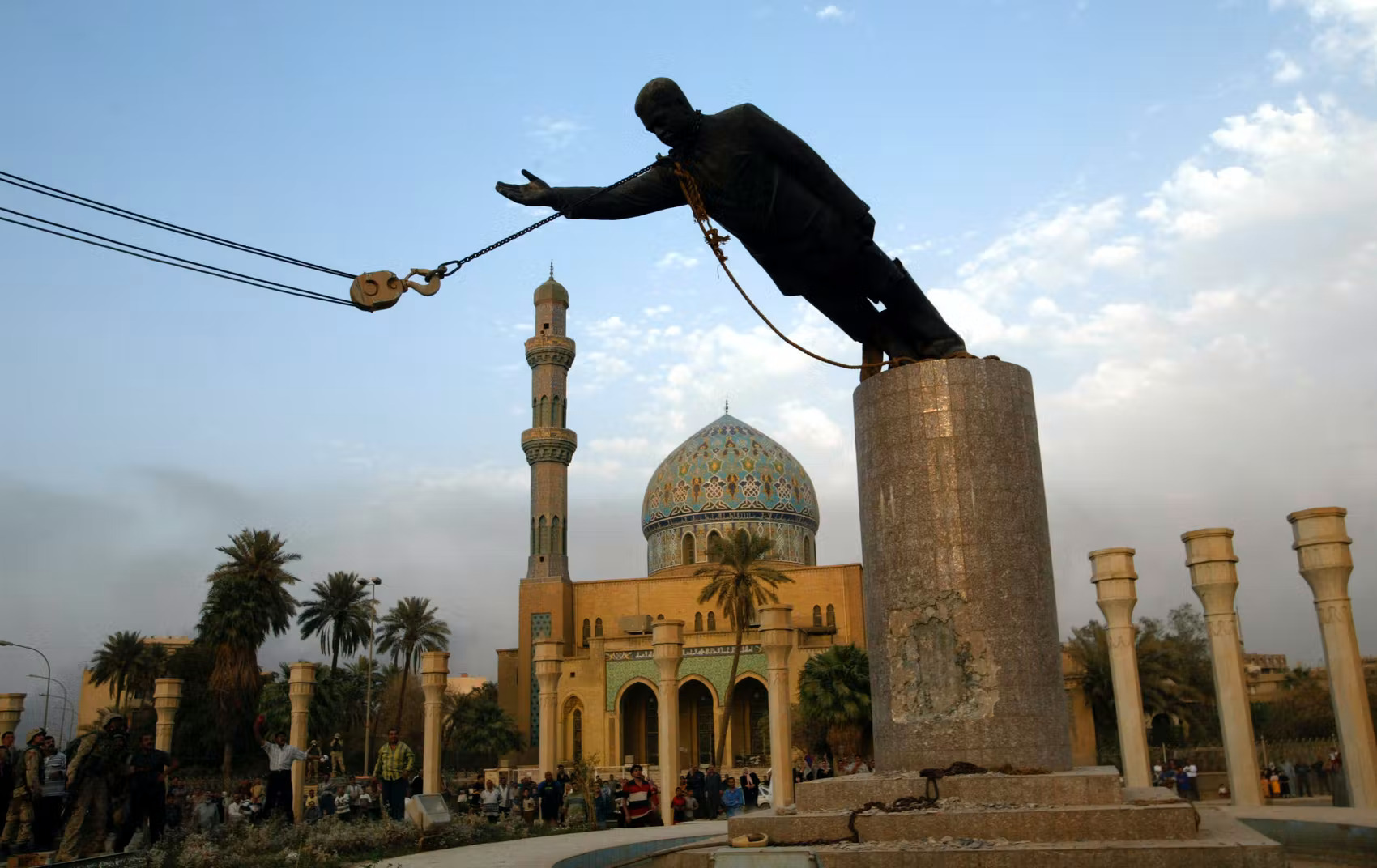
The things Epic Fury deliberately avoids — large-scale ground war, occupation, nation-building, coalition command chain, civ-mil hybrid — are the backbone of the Iraq War. Iraq as historical reference lets Epic Fury’s “lightness” show up clearly.
7.1 Legal Authority: From the Constitution to a SOFA
Article I §8 of the U.S. Constitution reserves the power to declare war to Congress; Article II makes the President Commander-in-Chief. For two centuries these clauses have been in tension: the President needs speed, Congress wants deliberation. In practice, most military operations don’t go through a formal declaration of war — they run through a middle path known as the Authorization for Use of Military Force (AUMF).
The legal chain of the Iraq War, in order:
- September 18, 2001 — Counterterrorism AUMF (PL 107-40). Authorized “all necessary and appropriate” force against those responsible for 9/11. Does not directly cover conventional action against Iraq.
- October 16, 2002 — Iraq AUMF (PL 107-243). The domestic legal basis for the war.
- November 8, 2002 — UN Resolution 1441. Declared Iraq in “material breach” — a political bridge, but not an explicit authorization to use force.
- May 22, 2003 — UN Resolution 1483. Recognized the U.S. and UK as Occupying Powers and gave the Coalition Provisional Authority (CPA) its international legal footing.
- October 16, 2003 — UN Resolution 1511. Authorized MNF-I, the basis for 30+ nations to send troops.
- November 17, 2008 — SOFA and Strategic Framework Agreement. Replaced UN authorization with bilateral U.S.-Iraq agreements; U.S. forces shifted from “occupying / multinational force” to “by-invitation forces” with a full withdrawal commitment.
- September 2014 — Operation Inherent Resolve. The U.S. invoked the 2001 AUMF plus the Iraqi invitation to fight ISIS, standing up CJTF-OIR.
This legal chain stands in stark contrast to Epic Fury’s “Article II + WPR notification” single layer — what looks like “a war” in Iraq was a layered stack of authorizations; in Epic Fury it’s been compressed to one Oval Office layer.
7.2 Chain of Command: From the White House to a Squad Leader
The Iraq War’s chain of command is a textbook display of the U.S. military’s architecture:
Top level:
President (Bush) → SecDef (Rumsfeld) → Combatant Commander (Franks, CENTCOM) → subordinate joint forces
The Chairman of the Joint Chiefs (Myers) sits as principal military adviser alongside the chain but not in it — the standard structure produced by the 1986 Goldwater-Nichols Act.
Theater level: CENTCOM’s headquarters is MacDill AFB, Florida, but Franks forward-based command in Doha, Qatar. He assigned forces by function to four Combined / Coalition Forces Component Commands:
- CFLCC (ground): LTG McKiernan in Kuwait
- CFACC (air): LTG Moseley and the CAOC at Al Udeid (the same CAOC Epic Fury uses)
- CFMCC (maritime): based in the Persian Gulf
- CFSOCC (special operations): parent for Task Force 20 / 121 / 714
This architecture is called joint operations because CFLCC commanded both Army (3rd ID, 101st Airborne) and Marine (1st MarDiv) units, while CFACC flew Air Force, Navy carrier aviation, and Marine aviation under a unified tasking order.
The occupation-phase organizational crisis — CJTF-7. On May 1, 2003, Bush declared the end of “major combat operations.” CENTCOM downshifted from campaign to battle level. McKiernan’s CFLCC was dissolved and replaced by Combined Joint Task Force 7 (CJTF-7), stood up from V Corps with LTG Sanchez (three stars) — widely judged a major organizational mistake: a headquarters built to run one corps suddenly responsible for every coalition unit, CPA coordination, and counterinsurgency across Iraq.
2004 — upgrade to MNF-I. CJTF-7 was upgraded and split into MNF-I (four-star strategic) + MNC-I (three-star tactical) + MNSTC-I (training Iraqi forces). Casey (2004-07), Petraeus (2007-08), and Odierno (2008-10) commanded MNF-I.
Surge + COIN. In January 2007, Bush announced the surge — 30,000 additional troops to a peak of ~170,000; Petraeus took over MNF-I as COIN doctrine’s architect.
Withdrawal → return. MNF-I became USF-I in 2010; the flag came down in Baghdad on December 15, 2011; the 2014 ISIS crisis prompted CJTF-OIR in Kuwait.
Same theater, 2003-2025: campaign (CFLCC) → battle (CJTF-7) → long occupation (MNF-I) → withdrawal (USF-I) → counterterrorism return (CJTF-OIR). Epic Fury’s stripped-down command model (CENTCOM → CAOC, no JTF) is the sharpest possible contrast to this zigzagging lineage.
7.3 Joint Operations
The invasion phase is probably the most reproducible case study of U.S. joint operations:
- One campaign, four functional commands. CFLCC, CFACC, CFMCC, and CFSOCC each owned a domain and moved in parallel. Air strikes and ground advance happened simultaneously.
- CAOC air management. A daily ATO with peak 1,700+ sorties in the first week, covering Air Force, Navy carrier, Marine, and SOF aviation. At the CAOC level, services disappeared — only aircraft and missions remained.
- Ground zoning. V Corps (3rd ID) and I MEF (1st MarDiv) took the east and west advance axes.
- Special operations on a separate chain. CFSOCC ran Task Force 20 / 121 for HVT hunts, which McChrystal later industrialized into the F3EA (Find-Fix-Finish-Exploit-Analyze) pipeline.
- Logistics and lift. USTRANSCOM moved 150,000 troops and hundreds of thousands of tons of equipment; APS-5 was already in Kuwait.
This was the result of two decades of post-Goldwater-Nichols evolution, rehearsed through training, joint professional education, and combined exercises. Epic Fury’s “air-sea-space-electromagnetic-cyber five-domain joint” is essentially this architecture evolved further — drop ground, add space and cyber.
7.4 Interagency Coordination: The Civ-Mil Hybrid
Winning the war was easy. Holding the country was not. What Iraq really exposed were failures in interagency coordination, especially at the civil-military seam — exactly the layer Epic Fury most thoroughly avoids.
Pre-war institutional maneuvering. Two parallel pre-war planning tracks: CENTCOM’s OPLAN 1003V at DoD, and State and USAID’s Future of Iraq Project. Rumsfeld pushed post-war planning into DoD via NSPD-24, delivering it to ORHA under retired LTG Jay Garner. State’s thousands of pages of material were shelved.
May 2003 — CPA and Bremer. ORHA was reorganized into the Coalition Provisional Authority, with Paul Bremer as administrator. Two CPA orders became the war’s inflection point:
- CPA Order 1 (De-Baathification): removed tens of thousands of experienced civil servants overnight.
- CPA Order 2 (Dissolution of the Iraqi Army): ~400,000 unemployed soldiers sent home angry — many became the insurgency’s backbone.
Both decisions were made inside DoD without a normal interagency review through State or CIA — command chain too short, checks too few.
June 2004 — CPA dissolves, the embassy takes over. CPA lasted less than 14 months. Thereafter US Embassy Baghdad ran politics while MNF-I ran security — the normal civ-mil architecture for any U.S. stability operation. The Petraeus–Crocker partnership (2007-08) became a model of unified civil-military command and shared strategy.
The frontline interagency unit — PRT. Provincial Reconstruction Teams scaled out to Iraq in 2005. Typical PRT: diplomat (State) as lead + military officer + USAID + DoJ + DoD civilians + Army/Marine security detail. At peak in 2008, Iraq had 31 PRTs.
Intelligence, financial, legal agencies. CIA (pre-war NILE teams, post-war F3EA), NSA (SIGINT), FBI (Deployed Field Elements), Treasury TFI (money tracking) — the full interagency interface was fully activated in Iraq.
Coalition coordination. Coalition of the Willing peaked at ~48 nominal nations, ~38 troop contributors. MNF-I divided Iraq geographically: MND-North (U.S.), MND-Baghdad (U.S.), MND-Central-South (Poland-led, 15+ nations), MND-South-East (UK-led). The largest non-NATO multinational operation of the post-Cold-War period.
Contrasted with Epic Fury’s “bilateral + base hosts + third-party mediation” — Iraq was full-spectrum expansion of civ-mil cooperation; Epic Fury expands at most to military-intelligence-diplomatic three layers.
7.5 Lessons and Legacy
Iraq left the U.S. military several quantifiable institutional lessons, several of which directly shaped today’s U.S. organization — including Epic Fury’s architectural choices:
1. Joint operations won; stability operations lost. March-May 2003 was the high-water mark of the post-Goldwater-Nichols joint operations template. But 2003-2006 exposed that the U.S. had no matching stability-and-reconstruction machinery. DoD Directive 3000.05 in 2005 elevated Stability Operations as a core mission. Epic Fury’s choice is blunt: don’t do stability, don’t lose.
2. Powell Doctrine versus “enough force”. Rumsfeld’s “less-is-more” posture won the initial war but lost the peace. The eventual fix (surge + COIN) returned to overwhelming force in spirit. Epic Fury’s “largest regional firepower in a generation” returns to overwhelming force in intensity — but gives up ground troops in scale. A synthesis of both lessons.
3. Interagency decision-making weakness. CPA’s orders bypassed a normal NSC interagency review. 2011’s Gates-Clinton era restored NSC centrality. PSD-1 under Obama required interagency NSC review for all major military action. Epic Fury’s scale and speed have compressed that NSC process heavily — the lesson isn’t fully implemented.
4. PRT and the 3D model. PRTs scaled to Afghanistan and Africa, institutionalized in State’s 2010 QDDR. Epic Fury has no PRTs because no ground presence — which also means the U.S. military’s frontline interagency tool has no current live practice in the 2020s.
5. The industrialization of JSOC. McChrystal’s F3EA became the standard U.S. counterterrorism recipe, exported to Yemen, Somalia, Libya, and the 2011 bin Laden mission. Epic Fury’s Khamenei assassination runs through the same F3EA pipeline (intel fusion → target lock → strike).
6. Title 10 / Title 50 convergence. SOF and CIA’s deep Iraq cooperation made “mixed missions” routine. Epic Fury’s high-value target strikes continue operating in that gray zone — legally unsettled.
Iraq’s lessons fall into three buckets: partly absorbed (Stability Ops doctrine, NSC, JSOC industrialization), deliberately avoided (no more occupations), and unresolved (interagency gaps, Title 10/50 ambiguity, congressional power erosion). Epic Fury cleanly exposes the state of all three.
VIII. Three Cases Side by Side
A single table:
| Dimension | Epic Fury (2026.02-) | Midnight Hammer (2025.06) | Iraq (2003-11) |
|---|---|---|---|
| Duration | 52+ days, ongoing | ~48 hours (U.S. action) / 12 days (Israel-Iran) | 8 years 9 months |
| Legal basis | Article II + WPR notification; Senate 53-47 blocks restriction | Article II + WPR notification | AUMF 2002 + UN 1441/1483/1511 + SOFA |
| Force scale | All 6 services + multiple carriers + strategic bombers + UAS swarm | 7 B-2 + 1 submarine + escorts + tankers | Peak ~170,000 U.S. + coalition |
| Ground forces | None (though legacy forces in Iraq) | None | Army + Marines + SOF |
| Command org | Multi-domain air-sea-space campaign + Task Force Scorpion Strike | Single air strike under CENTCOM | CFLCC/CFACC/CFMCC/CFSOCC → CJTF-7 → MNF-I → USF-I |
| Coalition | Bilateral (Israel) + base hosts + limited NATO + Pakistan mediation | Bilateral (Israel) + base hosts | 30+ nation MNF-I |
| Interagency | DoD + IC + State + Treasury + NNSA + DHS + DoJ; no CPA / PRT | DoD + IC + thin State | DoD + CIA + State + USAID + DoJ + Treasury; CPA, embassy, PRTs nested |
| Objective | Dismantle IRGC + nuclear/missile capabilities + decapitation | One-shot nuclear facility destruction | Regime change + long occupation |
| U.S. casualties | 13 KIA + 400+ WIA (52 days) | 0 | ~4,500 KIA + ~30,000 WIA (9 years) |
| Outcome | Iranian navy destroyed; Hormuz closed briefly; negotiations on/off | Objectives met, deterrence reset, no occupation | Regime change succeeded, stability failed |
Same organization, same command-chain skeleton, same CENTCOM — and three nearly incomparable outputs. That flex is the single most striking feature of U.S. military organization.
1. Chain reused, authorization trimmed. The same “President → SecDef → CJCS → CCDR” backbone covers everything from full war to surgical strike. Iraq needed AUMF + UN + SOFA; Midnight Hammer and Epic Fury both used only Article II + WPR. The structure doesn’t change; the authorization stack does. The flip side is that the executive branch can scale up operations without much congressional buy-in.
2. The interagency overhead rule. Interagency complexity tracks how “non-military” the mission is. Iraq aimed at regime change and nation-building — nested CPA, embassy, PRTs, coalition commands. Midnight Hammer barely touched the civ-mil apparatus. Epic Fury pulled in Treasury, NNSA, DHS, DoJ — but still did not build an occupation-grade structure. The U.S. military keeps getting better at striking; it hasn’t fundamentally improved at occupying or stabilizing.
3. The disappearance of Congress. AUMF 2002 involved formal legislative process and hundreds of pages of debate. Midnight Hammer and Epic Fury had no prior authorization — only after-the-fact notification. Congress’s passive acquiescence is starting to function as a de facto authorization. Libya 2011, Syria 2013-14, Soleimani 2020, Midnight Hammer 2025, Epic Fury 2026 — Article II is stretched case by case. Legal authority’s center of gravity is shifting from Congress to the President.
4. War forms are evolving fast. Iraq is 20th-century industrial war; Midnight Hammer is 21st-century precision deterrence; Epic Fury is a third form — high-intensity, multi-domain, time-limited, no ground. Foreshadowed in the 2022 JWC, 2024 Replicator, 2025 Force Design 2030. Epic Fury is its first industrial-scale test.
5. The combat-vs-stability mismatch is still there. Iraq’s biggest lesson: win a war in a month, lose a stabilization in a decade. Midnight Hammer and Epic Fury sidestep the problem by not doing stability. But if Epic Fury actually destabilizes the Iranian regime, the situation falls right back to Iraq-shaped organizational challenges — and the U.S. still has no answer for that.
IX. Looking Back
From the ongoing Epic Fury in 2026, back to Midnight Hammer in 2025, to Iraq in 2003 — the U.S. military has flexed the same organizational machine across three scales. Read newest to oldest, it’s a trajectory that becomes steadily more compact and more averse to long tails.
Epic Fury shows the 2020s new war form in its first industrial-scale live test — a sustained multi-week high-intensity campaign with no ground presence. It uses Midnight Hammer’s legal path (Article II + WPR) to deliver Iraq-scale fires density (1,700+ targets in 72 hours); it uses CENTCOM’s existing structure to carry all six services; it puts Task Force Scorpion Strike and LUCAS swarm into combat for the first time.
Midnight Hammer shows the stripped-down end of the same machine: same CENTCOM, same SecDef-President chain, same CAOC, a precision cross-ocean nuclear-facility strike in 48 hours. No new authorization, no new HQ, no coalition contingents, no civ-mil hybrid. The organization didn’t change; the mission, the authorization, and the tempo did.
Iraq shows the ceiling of post-Cold-War joint operations: AUMF + UN, a Bush → Rumsfeld → Franks → CFLCC chain, a four-domain joint command, a coalition of dozens of nations. The machine erased the Saddam regime in three weeks. But the next eight years of occupation, counterinsurgency, withdrawal, and return tested a different dimension — civil-military fusion, interagency coordination, long-duration social engineering — dimensions that still haven’t fundamentally improved.
If there’s a one-sentence summary across all three cases: the U.S. combat machine is increasingly precise, increasingly flexible, increasingly on-demand; the political and social governance machinery is still heavy; the constitutional check from Congress is thinning out. The first shows up in Epic Fury’s organizational choreography; the second in Iraq’s long tail; the third is a slow-moving trend line visible across all three cases and many others between them.
For an outside reader, the most interesting thing about these three actions isn’t the outcome — it is the process. A live sample of how a complex organization makes decisions under different pressure levels. How legal authorities are combined, how command chains are swapped, how agencies check and fail to check each other, when the machine expands into a web and when it contracts to a line, when it learns to sustain high intensity in the middle of the spectrum. Read closely enough, these aren’t just three military operations — they are three operating logs for a modern large organization under stress. The most recent one is still being written day by day.
X. References
U.S. military organization (the analytical framework):
- U.S. Military Overview — My own summary of U.S. military command, services, budget, training, joint operations, acquisition, logistics, and exercises
- Joint Publication 1: Doctrine for the Armed Forces of the United States — Top-level joint doctrine
- Goldwater-Nichols Defense Reorganization Act 1986 — The foundational law shaping current U.S. military command
- Unified Command Plan (UCP) history — OSD Historical Office archive
- CRS Defense Primer series — Congressional Research Service primers
2026 Operation Epic Fury:
- CENTCOM Operation Epic Fury — Official CENTCOM page
- CENTCOM press release: U.S. Forces Launch Operation Epic Fury — February 28, 2026
- Wikipedia: 2026 Iran war — Main article
- Britannica: 2026 Iran war — Integrated overview
- Lawfare: Operation Epic Fury Puts Congress and the Constitution to the Test — Legal analysis of constitutional authority
- U.S. State Department Office of the Legal Adviser: Operation Epic Fury and International Law — Official international-law position
- H.J.Res. 156 (War Powers Resolution, Senate rejection March 4) — Congressional status
- Army Recognition: Epic Fury 24h assets — Publicly disclosed weapon systems list
- Just Security: Iran, Israel and the United States at War collection — Legal and policy commentary
- Military.com: 365 US Troops Wounded, 13 Dead — Casualty data
- Daily Caller: 400 Wounded Update — April 22 casualty update
Iranian force projection changes:
- Wikipedia: 2026 Iranian strikes on Israel — Comprehensive record of Iran’s strikes on Israel with salvo timeline, casualties, and hits
- The Soufan Center: Iran’s Missile and Drone Arsenal Remains Potent Despite Five Weeks of Intensive Strikes — Authoritative April 6 assessment of remaining Iranian capability
- Global Defense Corp: Epic Fury degraded Iran’s nuclear and ballistic missile capability by 70 percent — March 27 destruction assessment
- Wikipedia: List of Iranian officials killed during the 2026 Iran war — Roster of killed Iranian officials
- Foreign Policy: Iran’s Proxies in Lebanon, Iraq, and Yemen Are Out for Themselves for Now — State of the proxy network
- Belfer Center: The Degradation of Iran’s Proxy Model — Structural analysis of proxy-network decline
- ACLED Middle East Special Issue: March 2026 — Conflict event tracking data
2025 Midnight Hammer:
- Wikipedia: Twelve-Day War — Comprehensive entry on the 12-day conflict
- Britannica: 12-Day War — Concise overview and timeline
- U.S. Department of War: Midnight Hammer Photos — Official operation photos
- Breaking Defense “How the US conducted surprise strikes on Iran” — Tactical details
Iraq War:
- U.S. Central Command — CENTCOM official site
- Rajiv Chandrasekaran, Imperial Life in the Emerald City: Inside Iraq’s Green Zone — The most thorough account of CPA operations
- RAND “Revisiting Goldwater-Nichols” — RAND assessment of the Act 30 years on
- Joint Forces Quarterly — NDU’s journal covering Iraq War joint-ops assessments
U.S. new-form-of-war doctrine:
- 2022 National Defense Strategy — Source of Integrated Deterrence
- Joint Warfighting Concept 2022 — Top-level doctrine for multi-domain operations and JADC2
- Replicator Initiative — 2023 low-cost attritable UAS program
- CSIS “What Operation Midnight Hammer Means for the Future of Iran’s Nuclear Ambitions” — Strategic assessment
- Arab Center Washington DC: The US-Israel War on Iran — Alternative-perspective analyses